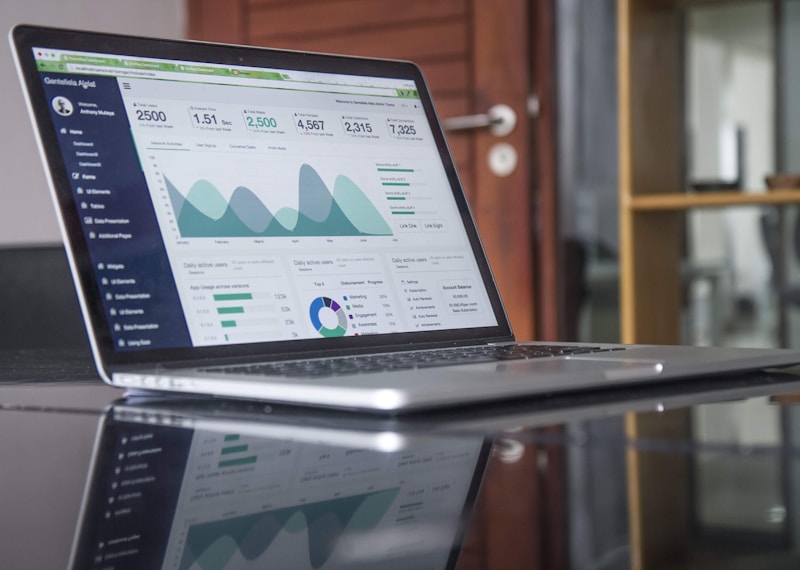
Picture the moment: a prospect shares their screen on a sales call. They pull up a dashboard — three bar charts, a dense table, a funnel visualization with seven steps. They start narrating it, quickly. “So as you can see, our conversion’s dropping off right here, and the reason we think it matters is because of what’s happening in this segment…”
Your meeting assistant is dutifully transcribing their words. Every sentence, captured. You’re going to have a perfect record of what they said.
But ask that transcript what was actually on the screen — what the chart showed, which segment they pointed to, what the numbers were — and it has nothing. A rectangle of context, right in the middle of the conversation, that simply doesn’t exist in the record.
This is the visual blind spot, and most people don’t notice it until they go back to review a meeting and realize the transcript is describing something they can no longer see.
Modern meetings aren’t audio events anymore
A decade ago, a conference call was a disembodied voice on a speakerphone. You could describe the entire experience with a transcript. Words in, words out.
That is not what meetings look like now.
Sales demos run on shared screens showing product interfaces, CRM dashboards, pricing tools. Technical interviews happen inside IDEs and whiteboarding apps. Design reviews live in Figma. Client consultations walk through spreadsheets and PDFs. Even casual 1:1s drift into a “let me just pull this up” moment where a chart or a document becomes the subject of the next ten minutes.
Research from Microsoft’s 2024 Work Trend Index pointed out that the median knowledge worker is now spending a significant share of meeting time looking at shared visual content rather than at other participants’ faces. Zoom’s own engagement data shows screen-share activity has been trending upward year over year since 2020.
And yet almost every AI meeting tool on the market is still built around the assumption that what’s happening on the call is the audio. Recording tools record video, yes — but they don’t understand what’s in it. Transcription tools produce clean, searchable text. Summary tools compress the words into bullet points. None of them can tell you what was actually on the screen.
Why this matters more than people realize
It’s easy to dismiss this as a minor gap. If the person talking is competent, they’ll narrate what’s visible, right? So the words should carry the meaning.
In practice, no. Three reasons:
People narrate visuals badly. Watch any demo back with the audio off and you’ll see the problem. The presenter gestures at the screen and says “this,” “here,” “these numbers,” “the one on the right.” Deictic language. It only makes sense if you can see what they’re pointing at. In a transcript, those words are worse than useless — they create the illusion of information while actually being empty.
The important stuff is often silent. A prospect shares a screen, and you notice they’ve got fifteen tabs open — one of them is your competitor’s pricing page. That’s a signal. Nobody said anything about it, so it won’t be in any transcript. But it might be the most important thing that happened on the call.
Numbers don’t survive speech. A dashboard might show seventeen key metrics at a glance. In words, the presenter will mention maybe two. The other fifteen are visible for the whole meeting and then gone forever, regardless of how good the transcription is.
The result is a documentation layer that systematically ignores the highest-density information in most modern meetings. It’s like transcribing a chess game by only writing down what the players said about their moves.
The emerging fix: treating screens as first-class content
A small shift is happening in the meeting AI space. Instead of transcription being the whole story, some tools are starting to treat visual content as a separate, capturable layer. The pattern looks like this: during the call, you capture a screen (your own screen, the shared screen, any visible window) and hand it to an AI that can actually read it — extract the text, interpret the chart, identify what it’s showing.
Technically, this became feasible once multimodal language models (GPT-4V, Claude’s vision capabilities, Gemini, and similar) reached a level where they could reliably parse UI screenshots, not just photographs of cats. That’s been a 2023–2025 development, and it’s just now making its way into meeting tools.
The difference in workflow is subtle but significant. Instead of relying on the person sharing the screen to narrate everything, you take responsibility for capturing what you actually need. A chart you want to reference later — snapshot it. A dashboard number that seems important — snapshot it. A piece of code the interviewer put up — snapshot it.
And because the AI is reading the image, you can immediately ask it a question. What’s the conversion rate in the third funnel step? What programming pattern is this code demonstrating? What’s the largest line item on this budget? You get an answer in seconds, mid-call, without breaking the flow of the conversation.
This is the feature category sometimes called “screenshot to AI” or “visual context capture.” It’s not the same as recording, and it’s not the same as a transcript — it’s a third channel of meeting intelligence, one that’s been missing until recently. For teams thinking about the difference between recording meetings and actually coaching through them, this distinction matters. Recording preserves everything badly. Visual context capture preserves the specific things you actually need to act on.
Where it earns its keep
A few scenarios where visual context capture changes the nature of the meeting:
Sales demos where the prospect shares their data. A VP of operations pulls up their internal dashboard to show you their current workflow. In the old model, your post-call summary has a sentence like “Prospect walked through current dashboard, noted inefficiency in Step 3.” That’s nearly useless. With visual capture, you have the actual screenshot, the actual numbers, the actual structure of their process. Your follow-up can reference their exact pain points back to them by number. Deals close faster when prospects feel that you were actually paying attention, and visual capture is what pays attention to the thing they care most about: their own data. This is one of the patterns that shows up in every serious review of AI sales tools in 2026 — the best tools are the ones that can do something with the shared screen, not just the audio.
Technical interviews. An interviewer puts a coding problem on screen. You need to think through it out loud. Having a capture of the exact problem — including edge cases, example inputs, and any constraints the interviewer typed — means you won’t misremember what they asked. It also means the post-interview debrief can actually diagnose what you got wrong, rather than vaguely reconstructing the question from memory. Interviews are a strange case where the first ninety seconds do more signaling than the rest of the hour, but the visual content — the problem on the screen, the code you wrote, the diagrams you sketched — is what actually gets graded.
Design and product reviews. Half of what happens in these meetings is pointing at parts of a screen and arguing about them. The audio transcript captures the arguments. The visual layer captures what was being argued about.
Financial or medical consultations. A financial planner walks a client through a spreadsheet of projected scenarios. A dietitian reviews a meal plan on screen. A physician shows a patient a chart of their lab trends over time. The screen is the content of the meeting, not just a prop for the audio. A transcription-only tool documents the conversation. A visual-aware tool documents the decision.
Multilingual or accented conversations. If audio transcription quality degrades — heavy accent, noisy room, cross-talk — the visual layer becomes the backup channel of truth. You may not have caught every word, but if the shared screen is preserved, the core information of the meeting is still intact.
The cost of ignoring the visual channel
Most teams don’t realize how much they’re losing until they try the alternative. The pattern is consistent: a sales rep switches from a transcription-only tool to something with visual capture, uses it for a week, and then goes back to their old tool for one meeting. They hate it immediately. Not because the transcription got worse — it didn’t — but because they realized how much of what they cared about was happening on screen the whole time.
This is how a lot of meeting-tech shifts have happened. The old tool feels fine until you see what’s possible, then it doesn’t.
A newer tool called Edisyn takes the visual-aware approach seriously: it runs as a desktop assistant that can capture any on-screen content during a call and immediately analyze it — the same flow works for a prospect’s dashboard during a sales call, a coding problem in an interview, or a chart in a client consultation. It’s one of the more practical examples of the “screen as first-class meeting content” idea actually shipping. Ghost Mode, which keeps the assistant invisible to screen recordings on the other side, is the quiet detail that makes it usable in situations where you don’t want the other person to know you’re using an AI tool at all.
Not every meeting tool has to go this direction. Some teams genuinely don’t need it — if your meetings are audio-first and you never share screens, transcription alone is fine. But for sales, product, design, technical hiring, consulting, and most knowledge work involving any kind of structured data, visual capture is quickly moving from nice-to-have to standard expectation.
How to think about adopting it
A few practical notes for anyone evaluating this.
Don’t confuse visual capture with recording. Video recordings are a blunt instrument — they preserve everything, which means nothing is actually searchable or actionable. Visual capture is selective by design: you grab the specific frames that matter, and the AI turns them into structured information you can reference. It’s the difference between hoarding and documenting.
Think about your screens, not theirs. One subtle point: a lot of the value is capturing your own screen, not just the prospect’s. If you’re a sales rep and you’ve got battle cards, competitor analyses, or pricing notes open on your second monitor, being able to capture and reference them mid-call through an AI is genuinely useful. The AI turns your own prep materials into on-demand context.
Check how it handles privacy. For industries with confidentiality requirements — healthcare, legal, financial advisory — the way visual content is stored, encrypted, and deleted matters a lot. A tool that ships captures to an external server without clear retention controls is a non-starter. Ask vendors directly.
It pairs better with live coaching than with post-meeting analysis. The value compounds when you can act on the visual content during the meeting. Realizing after the call that the prospect’s dashboard showed a red flag you missed is frustrating. Realizing during the call, when you can still respond to it, is the whole point.
Not all capture is equal. Some implementations are slow, produce low-resolution images, or struggle with dense text. The quality floor has been rising fast, but test before you commit. The difference between a tool that can read a screenshot of a complex spreadsheet and one that returns “this appears to be a table of numbers” is the difference between useful and useless.
What the next year looks like
Expect visual context to stop being a differentiator and start being table stakes. The same way transcription went from “innovative feature” to “thing every tool has to do” between 2018 and 2022, visual capture and real-time visual understanding are going to move through the same curve between 2025 and 2027. Tools without it will look dated. Teams relying on transcription-only workflows will start to feel the gap.
For anyone thinking about their current meeting stack, the question isn’t “do I need this yet?” It’s “how many of my meetings in the last month had information on a screen that I couldn’t go back and retrieve after?” If the answer is “most of them,” the visual blind spot is already costing you — you just don’t have a way to see what you’re losing.
And that’s the clever trick of the problem. Blind spots, by definition, aren’t visible. You only notice them when you start looking somewhere new.